

YOUR CART
- No products in the cart.
Subtotal:
₹0.00
 Limited-time offer! FREE shipping and NO platform fee. Don't miss out. Shop now and save big!
Limited-time offer! FREE shipping and NO platform fee. Don't miss out. Shop now and save big!
Limited-time offer! FREE shipping and NO platform fee. Don't miss out. Shop now and save big!
Limited-time offer! FREE shipping and NO platform fee. Don't miss out. Shop now and save big!
Limited-time offer! FREE shipping and NO platform fee. Don't miss out. Shop now and save big!
Limited-time offer! FREE shipping and NO platform fee. Don't miss out. Shop now and save big!
Limited-time offer! FREE shipping and NO platform fee. Don't miss out. Shop now and save big!
Limited-time offer! FREE shipping and NO platform fee. Don't miss out. Shop now and save big!
Limited-time offer! FREE shipping and NO platform fee. Don't miss out. Shop now and save big!
Limited-time offer! FREE shipping and NO platform fee. Don't miss out. Shop now and save big!
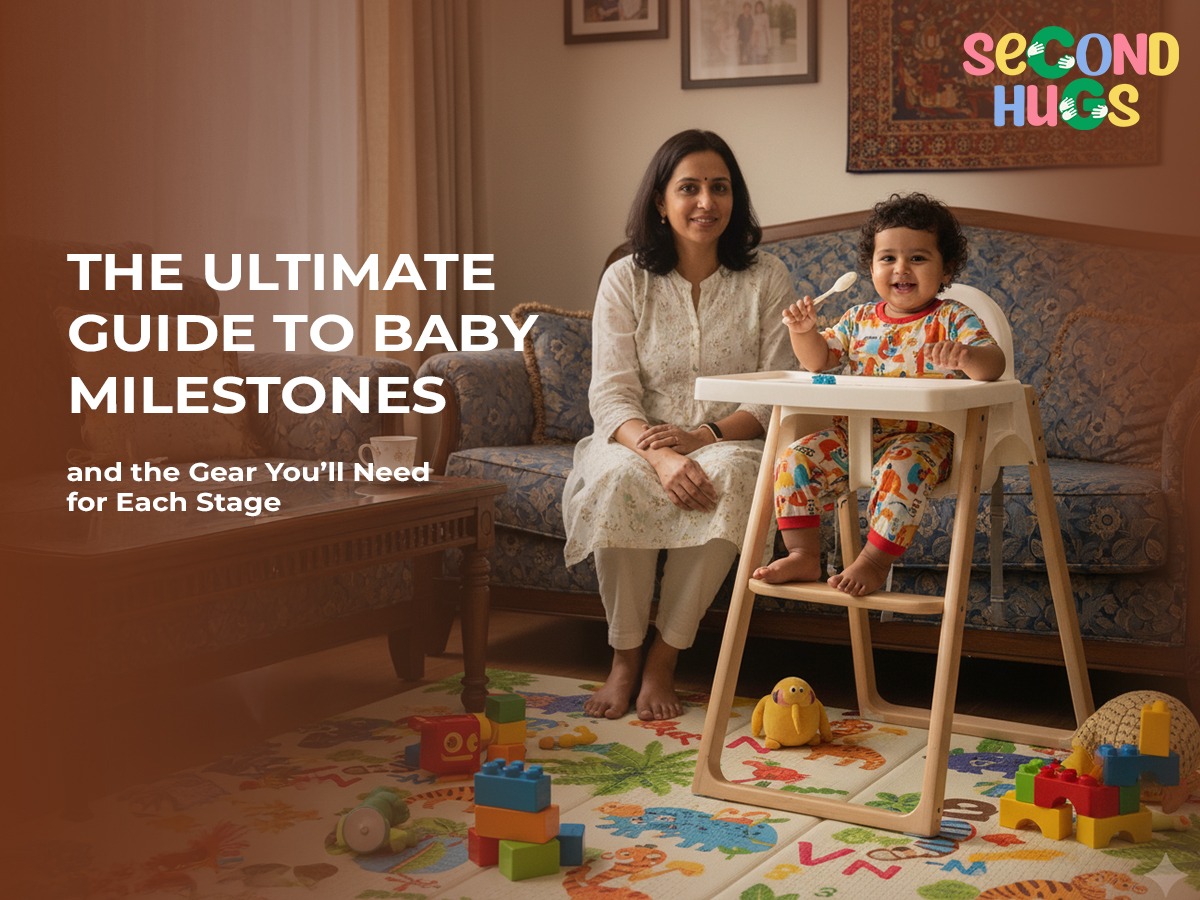
Watching your baby grow is one of those experiences that feels both fast and magical. Every few weeks, they’re doing something new—lifting their head, grabbing toys, rolling over, tasting food for the first time. Each milestone brings its own set of needs, and having the right gear on hand keeps you prepared instead of scrambling last-minute.
Here’s the thing: babies don’t wait for us to be ready. They move to the next stage the second they’re developmentally primed. This guide walks you through those major milestones and the essential gear that supports each phase, so you can stay a step ahead.
Milestones are more than cute moments; they help you understand what your baby needs as they grow. When your baby first starts rolling, for instance, it’s a cue to update their sleep routine. When they start sitting, it’s time for a high chair. These natural transitions guide your decisions.
Milestones usually fall into four areas:
Each one nudges you toward gear that keeps them safe, stimulated, and comfortable.
Baby gear isn’t just convenience—it’s safety. A firm sleep surface reduces risks. A proper stroller keeps their posture supported. A high chair introduces solids safely. The right tools protect them while giving them space to explore.
Think of it this way: you’re building an environment that grows with them. When the gear is age-appropriate, your baby gets room to learn without unnecessary hazards.
Planning by developmental stages is your shortcut to staying organized. Instead of buying everything at once, divide essentials into:
This gives you clarity, reduces overwhelm, and stops you from overbuying.
Here’s a quick framework to guide your checklist:
Wardrobe: Soft onesies, sleepsuits, mittens, socks, sleep sacks.
Nursery: Crib or bassinet, firm mattress, fitted sheets, waterproof protectors.
Feeding: Bottles, burp cloths, bibs, high chair (later), spoons, suction bowls.
Health & Safety: Thermometer, baby nail clippers, nasal aspirator, first-aid basics, baby-proofing items.
Play & Mobility: Play mat, stroller, age-appropriate toys, bouncer or activity center.
Watch for signs:
Your baby tells you what they’re ready for—just pay attention.
Every product has age and weight recommendations for a reason. Using something too advanced or too young can compromise safety.
Look for:
For gear like strollers, cribs, and car seats, quality isn’t negotiable.
Some items require 100% safety assurance:
As soon as your baby outgrows something, switch it out:
This keeps them safe and supported.
This stage is all about sleep, feeding, and diapering. Keeping things simple helps.
Your newborn should always sleep on a firm, flat, uncluttered surface.
Keep a small health basket handy for quick access.
This is when the fun (and chaos) begin.
As your baby becomes mobile, safety-proofing becomes essential.
Expect mess. Lots of it. A good high chair makes life easier.
Raising a little one means adjusting constantly—new skills, new routines, new gear. When you understand the milestones and prepare for them, you make life easier for yourself and much safer for your baby. Keep an eye on your child’s cues, choose gear that matches their stage, and update things as they grow.
And if you ever need a trusted place to explore gently used baby essentials, Second Hugs is always here to support your parenting journey with thoughtful guidance and helpful resources.
Most babies roll between 4–6 months. Once this happens, switch from swaddles to sleep sacks for safety.
Install outlet covers, corner guards, cabinet locks, and move breakable items out of reach.
As soon as your baby rolls, pushes up, or reaches the bassinet’s weight limit.
Have one ready, but start solids only when your baby shows signs of readiness—usually around six months.
Look for full reclining positions or compatibility with an infant car seat.
Soft rattles, sensory toys, black-and-white books, teething rings, and play mats.
Any time your baby hits a new milestone or the gear shows wear, instability, or outdated safety features.
Diapers, wipes, burp cloth, extra outfit, bottle or sipper, small toy, sanitizer, and a changing pad.